Planning for Parks and Recreation When Your Backyard Is Public Land

It's a fall afternoon in Crested Butte, and we've set up a pumpkin patch at Town Ranch to gather input on the town's new Parks, Recreation, Open Space, and Trails (PROST) Plan. As the event winds down, a group of middle school mountain bikers roll in straight from team practice and start to share their ideas for future trails and recreation opportunities. It's a quintessential Crested Butte scene, one where outdoor recreation is woven into everyday life, and where even kids have strong and respected opinions about the trail system. But it also hints at a reality that shapes parks and recreation planning in many gateway communities such as Crested Butte: the recreation system that supports a youth mountain bike team extends far beyond municipal parks, relying on public lands, nonprofit partners, regional trail networks, and facilities that serve far more people than live in town.
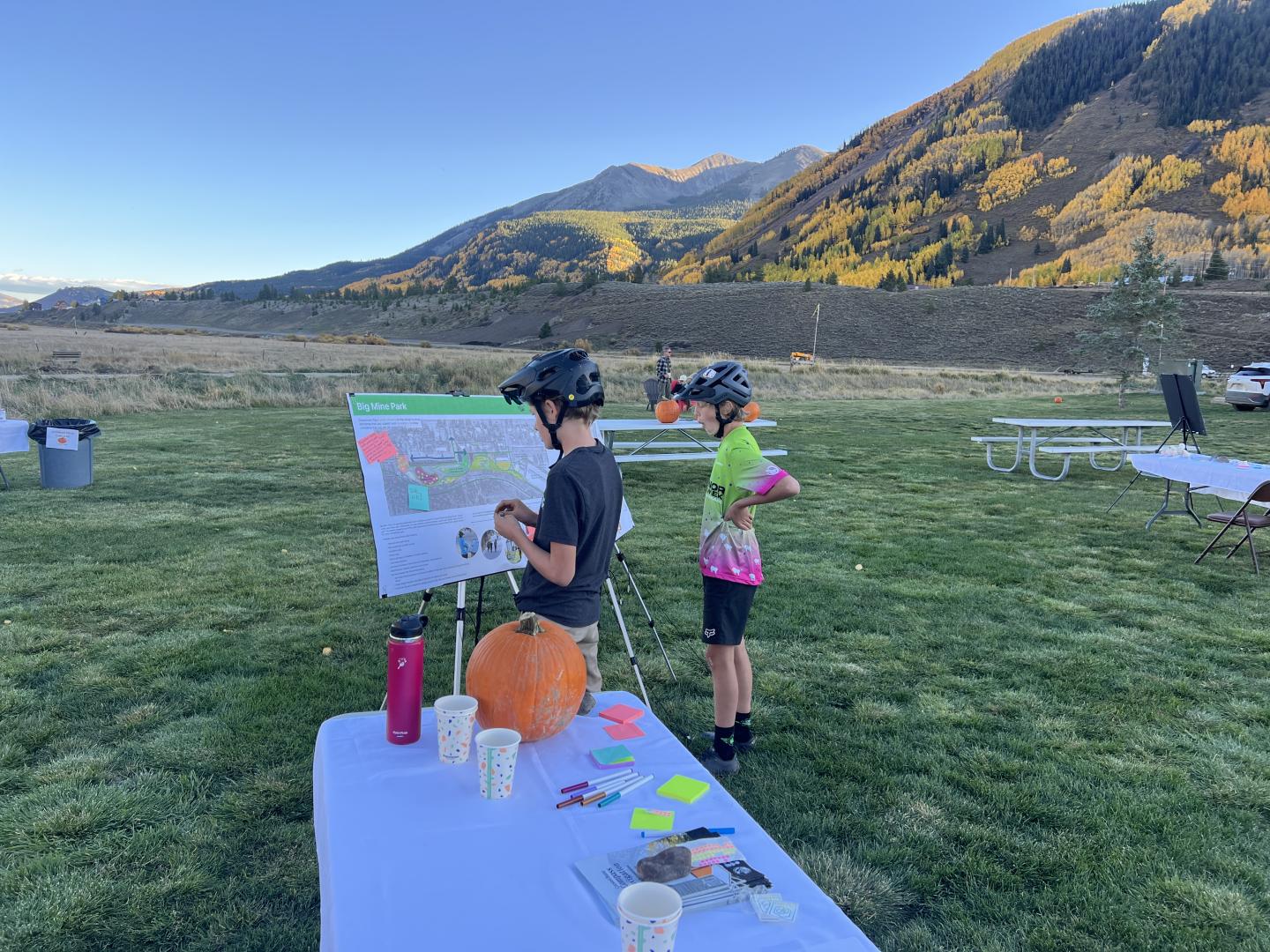
Kids at the Crested Butte community engagement event providing feedback on recommendations.
Moments like the one I just described are why I love planning in rural, recreation-based communities and serve as a reminder that these places require a very hands-on personalized planning and engagement approach. The approach differs from what would be used in a suburb or city, a rural town without an influential recreation economy, or even other, larger mountain towns with bigger populations and well-established recreation funding sources, such as Breckenridge or Aspen.
Traditional parks and recreation planning was built for communities that own most of their recreation assets and serve mostly local residents. Outdoor recreation-rich gateway communities don't fit that model, and their planning, funding, and governance approaches need to evolve accordingly.
At SE Group, we also recently worked on a PROST plan for Virgin, Utah, a town that shares some similarities to Crested Butte but also has distinct differences. Virgin is a desert town just outside of Zion National Park with a population of around 715 people, while Crested Butte has long snowy winters and a population of 1,600. Virgin is finalizing its first PROST plan with less than one full-time parks staff person and no recreation department, while Crested Butte has an established PROST department with a recently adopted and updated 2026 PROST after its original version in 2010. We can draw some lessons learned and themes from our work in these two places, on how to best plan for rural, outdoor-recreation based communities.
Where national benchmarks fall short
Most PROST plans compare a town against national benchmarks from the National Recreation and Park Association (NRPA), whose smallest peer group is communities under 20,000 people. That's more than 25 times Virgin's population.
On paper, both Crested Butte and Virgin look well served. Virgin has close to 10 times the typical parkland per resident but spends less than a fifth of the typical amount per acre on upkeep. In Crested Butte, every resident lives within a 10-minute walk of a park and the town spends about four times the typical amount per acre, due to its small parks receiving heavy use from a regional population, high tourism, and the need to withstand harsh mountain winters. However, initial statistics don’t tell the whole story.
Access to parks and recreation in these rural communities is hard to measure. Open desert borders nearly every home in Virgin, but a patch of desert isn't a park or a trailhead, and fewer than half of Virgin's properties are within a half mile of an official one. For these projects, we use the national benchmarks as a starting point and cross-reference them against what staff and residents tell us. We supplement the national benchmarks with surveys, focus groups, and interviews to understand the deeper context and the bigger, more nuanced picture.
Serving a broader population
Crested Butte's parks and programs serve closer to 5,000 people across the North Valley, and more than 10,000 during peak season, when visitors, second homeowners, and seasonal workers are all in town. The Town is the only local government offering recreation programs in the North Valley, a role that evolved over decades without formal agreements or shared funding from its neighbors. One of the recommendations to support the Town as the North Valley grows is to work with Gunnison County on a recreation impact fee for new development outside town limits. The recreation impact fee would contribute funding that currently is only paid for by Town of Crested Butte residents, sales tax proceeds in the town limits, and program fees.
In Virgin, Zion-bound visitors drive through town, the Red Bull Rampage draws thousands of people to the area each fall, and the BMX track brings 100 to 200 visitors each week. Resort and recreation taxes capture some visitor spending, but the upkeep still falls to a very small staff.
In a suburb, most park users live in the municipality that pays for the parks, while a larger resort town often has the tax base and staff to absorb visitor demand while serving the local population. Smaller recreation and gateway towns see regional demand without the scaled regional budget.
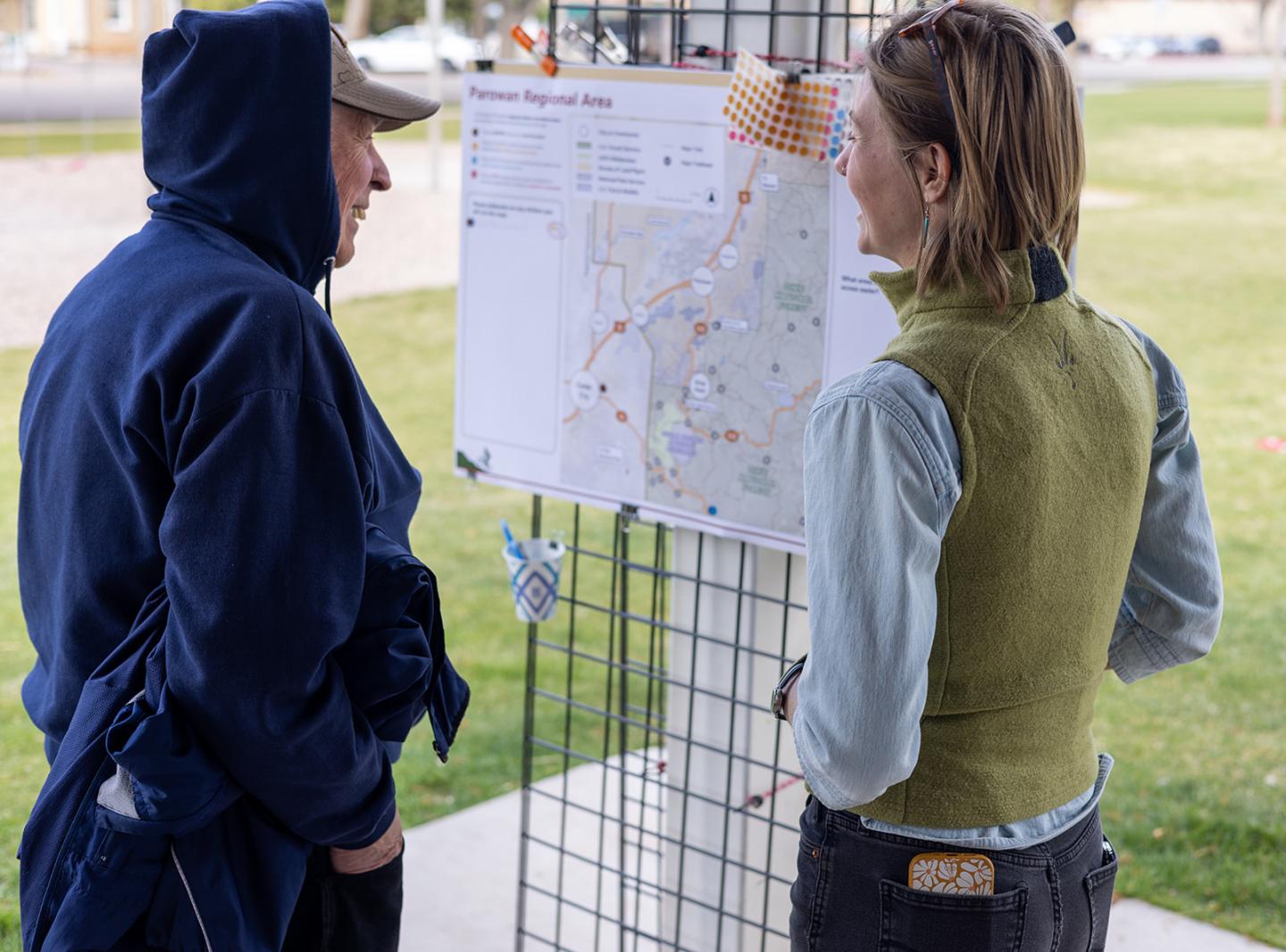
Community conversations help shape recreation systems that reflect local needs, values, and priorities.
Much of the system belongs to someone else
In Virgin, the Bureau of Land Management (BLM) manages more than half the land inside town limits. Falls Park, the Town's river park, is BLM land managed in partnership with the Town, right next to a Nature Conservancy preserve. Residents have worn social trails across BLM land to reach parks and the river, and a private concessionaire runs the Town-owned BMX track.
Crested Butte sits at the center of a trail network that mostly lies outside town limits. Its open space program pairs real estate transfer tax (RETT) revenue with land trusts and the county to protect land around town, with much of the land owned by the land trust or is still private property with public recreation easements. Many local sports clubs, including hockey, soccer, Nordic skiing, and mountain biking, started as Town programs, grew into their own nonprofits, and still rely on Town fields and facilities to operate.
Another trend we observe is the growing emphasis on connecting people to recreation opportunities, recognizing that the journey to a park or trail is often part of the recreation experience itself. In Crested Butte, this idea is reflected in the "Town as a Trailhead" concept, which includes enhanced in-town trailheads, improved wayfinding, and a Perimeter Trail loop that encourages people to begin their adventures from town rather than drive to crowded trailheads. Similarly, residents in Virgin expressed a desire for safe walking and biking connections between neighborhoods, parks, and surrounding public lands, including safer crossings of State Route 9. These investments in connectivity help address quality-of-life priorities by making it easier for residents to access their favorite places safely and comfortably, reducing reliance on cars while creating more enjoyable and accessible routes to recreation.
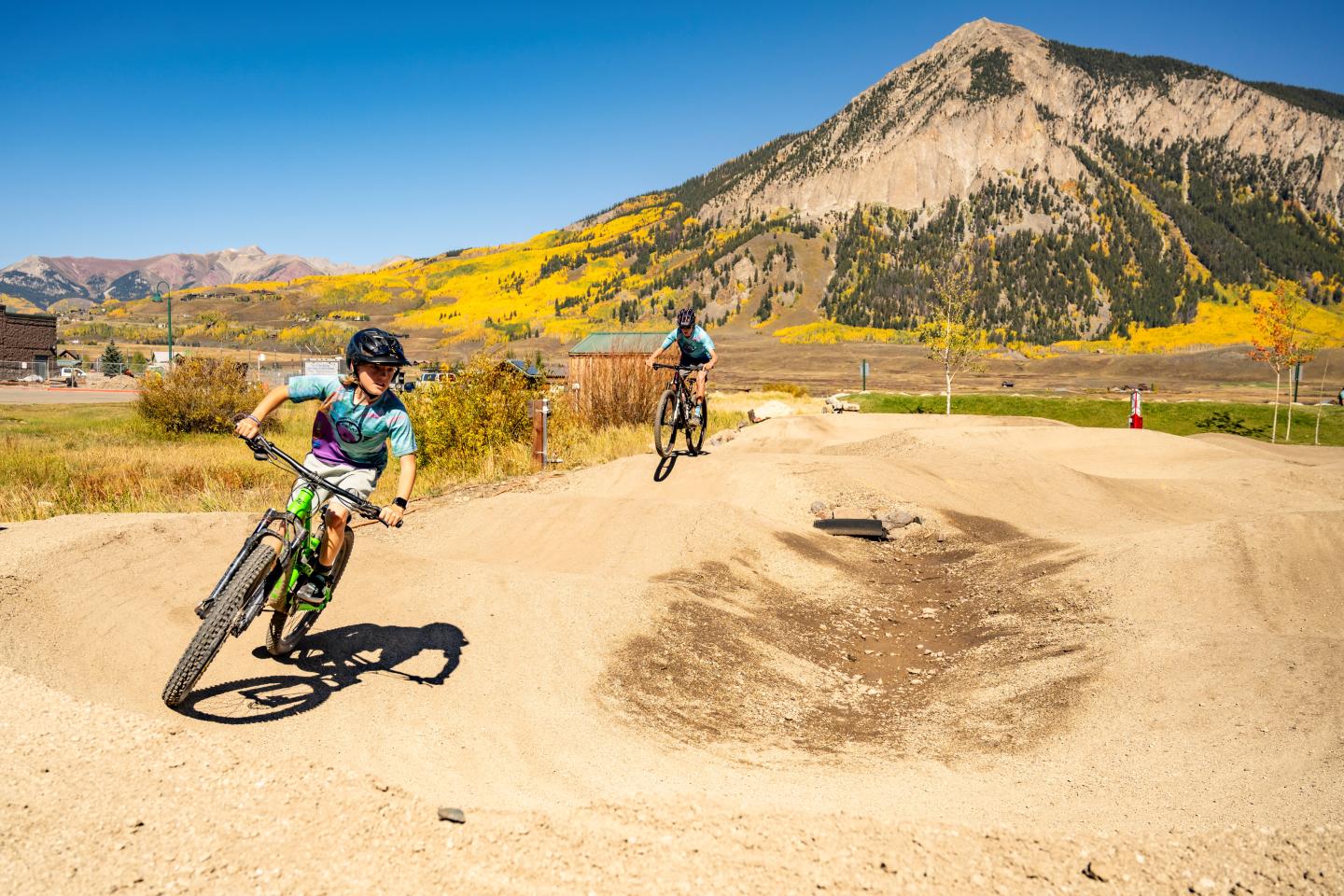
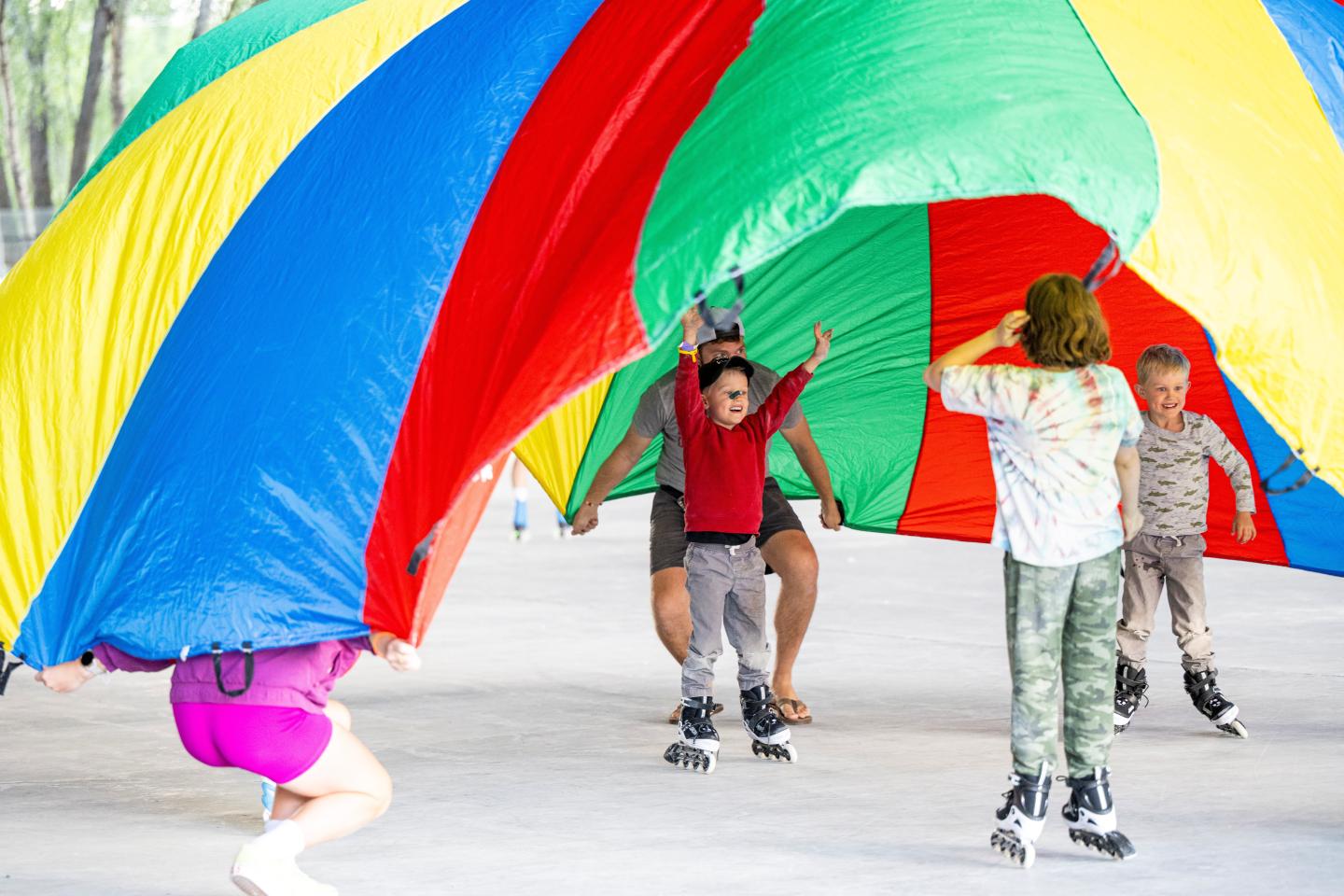
Devo Bike Park camp in Crested Butte, photo credit Nolan Blunck
The biggest gaps are indoors
You might expect communities surrounded by trails, rivers, and public lands to be asking for more outdoor recreation opportunities. Instead, many of the gaps residents identified were indoors. While people are generally satisfied with the outdoor amenities available to them, and often have ideas for making them even better, they also want complementary facilities and programs that support their needs across different stages of life and throughout the year.
In Crested Butte, a recreation center with a pool was the most common "magic wand" wish in early community input. Currently, there's no public pool anywhere in the North Valley. The local youth cycling program highlighted how many kids are not strong swimmers, making a pool as much a community safety investment as a recreational amenity. Similar conversations have surfaced in other communities, such as Lake County, Colorado, where deferred maintenance caused the community pool to shut down, and lack of funding has kept it closed. In Virgin, many residents use recreational resources available in nearby communities just 15-20 minutes away, and public feedback was divided between the need for more local recreation programming and the opportunity to use local resources to support other recreation priorities.
Larger mountain communities such as Breckenridge and Aspen can support full recreation centers with pools, climbing walls, and robust programming. Crested Butte and Virgin, however, aren't big enough to build and run one right now, so both PROST plans focus on getting more out of existing indoor space. Crested Butte's only public indoor recreation space, Jerry's Gym, was built in 1927, with about half of the Town’s programs running waitlists, showing a dire need for additional indoor space. Virgin recently moved its Town Hall into a former church with a gymnasium that could host open gym and yoga classes. While the solutions vary, both communities are looking for practical ways to expand indoor recreation opportunities without taking on the cost of a full-scale recreation center.
As these towns age (and the demographics show that they are), older residents are expressing a desire for traditional recreation too: an indoor gym, a yoga class, somewhere to see friends in the middle of winter or a desert summer. Crested Butte's senior center utilizes space from local churches, while many Virgin residents drive to Hurricane or La Verkin for gyms and group class offerings. For a lot of people, that class is a third place, where catching up with neighbors means as much as the workout itself.
Nontraditional facilities, shaped by climate
Standard benchmarks count ballfields and playgrounds, but they often fail to capture the unique assets that define outdoor-oriented communities, such as BMX tracks, sledding hills, pump tracks, Nordic ski trails, or a stretch of river that's popular for tubing and fly fishing. Between them, these two towns have all of those amenities and contribute to what makes the communities attractive to residents and visitors. However, they also require policies most parks departments rarely think about, such as an e-bike policy for trails on adjacent BLM lands, rules for guide companies on Town trails, and fixing trail routes on AllTrails and Google Maps so that visitors don’t trespass or degrade a sensitive resource.
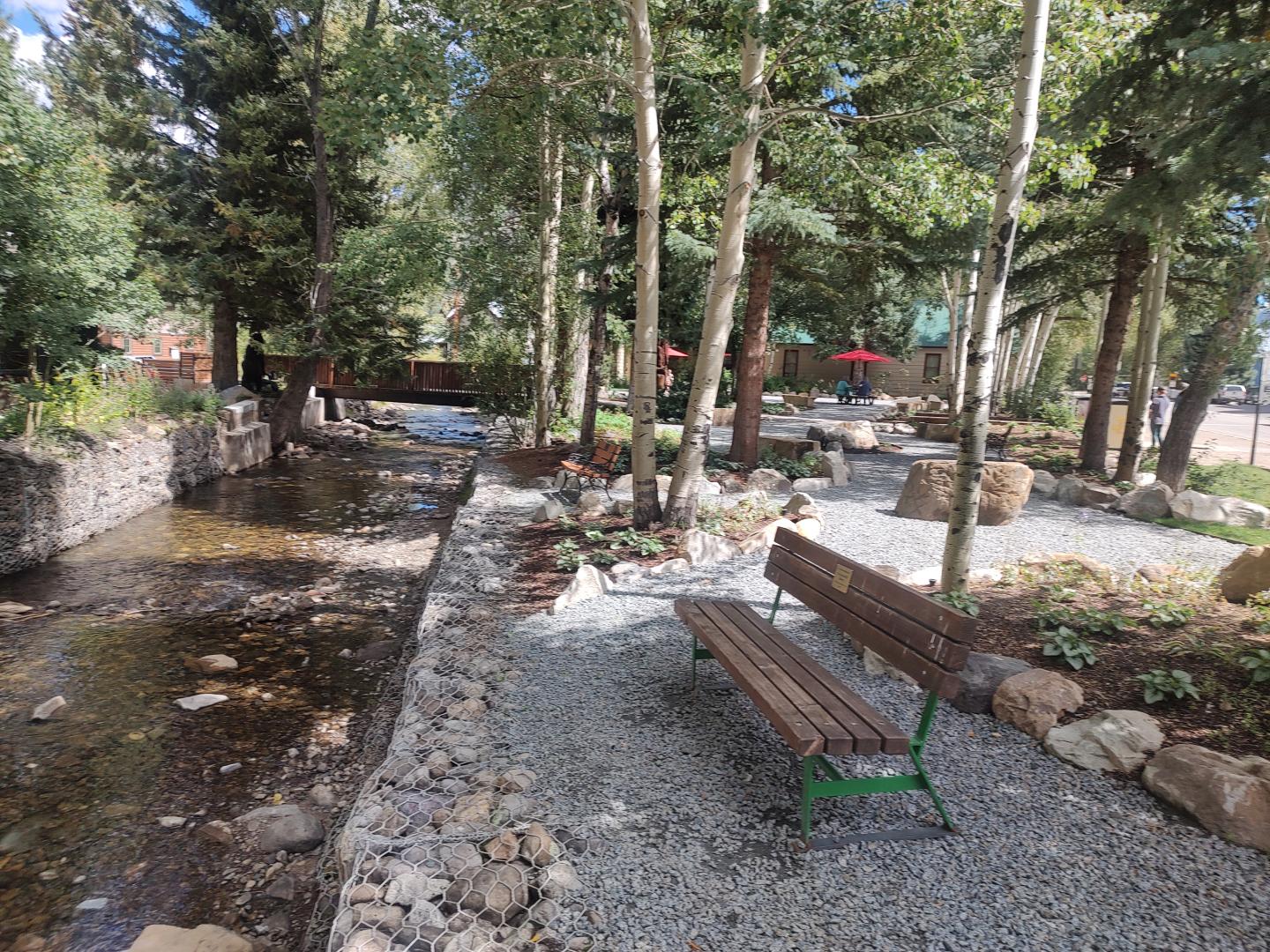
Climate influences nearly every design decision. In Crested Butte, snow removal shapes decision making for almost every aspect of park design and maintenance, considering how it will look and be used in both the summer and winter. The 8th Street Greenway, for example, stores plowed snow all winter. The plan explores ways to maximize its year-round usability through removable benches, shade, and play features, increasing the usable park space by about a third in the summer, even though it is dedicated to snow storage in winter. In Virgin, the priorities are shaded playground areas and pump tracks and riverside pocket parks that provide passive, shaded, water-adjacent space but are also built to handle flash floods.
Two towns, a lot in common
Virgin and Crested Butte are very different places: desert and snow, national park gateway and ski town, a first plan and an update to a well-used plan where nearly everything was implemented in the last 15 years. Each serve far more people than live in town, relies on partnerships and adjacent public lands to provide recreation opportunities, and recognize the importance of everyday indoor spaces that help a small-town work year-round for its residents.
As recreation demand grows across the West, the next generation of parks and recreation planning will need to focus less on municipal assets alone and more on regional systems, partnerships, public land relationships, and sustainable funding models.
I'm curious what others are seeing. If you work in or with a rural, recreation-rich gateway community, what recreation trends have you noticed as your town grows and changes? Come find me at a conference, connect with me on LinkedIn or send me a note; I'd love to continue the conversation!