The Essential Characteristics of Strong Outdoor Recreation Economies: Pillar #2 Recreational Infrastructure

In this installment of our series exploring the Characteristics of Strong Outdoor Recreation Economies, Senior Associate, Community & Recreation Planning, Alex Belensz, talks about the second of four pillars that make up SE Group's community-centric framework for understanding and supporting outdoor economies: Recreational Infrastructure.
What can two parallel long-distance trails in Vermont teach us about the role of infrastructure in supporting strong outdoor economies?
At a basic level, Vermont’s historic Long Trail and emerging Velomont will be pretty similar - two continuous trails running the length of the state, providing a “spine” of recreational opportunities from the Massachusetts border to Canada. Beyond this, the trails are quite different; yet both will play an important economic role for the state and communities along the corridor.
In our last post, we discussed the foundational importance of natural lands and waters to local outdoor recreation economies. An informed economic strategy around the outdoors must also consider the means by which people have their recreational experience in these places. Trails, parking areas, boat launches, campground facilities, bathrooms, and more are the critical infrastructure that help create outdoor destinations.
In this post, we’ll use these neighboring trails to illustrate a common question for places seeking to lean into the outdoor economy: what does great outdoor recreation infrastructure look like for our community? We’ll introduce the concept of mission-aligned infrastructure along with a simple evaluation framework for community leaders and practitioners to think about how their infrastructure (existing or envisioned) stacks up to their economic goals.
What is “Mission-Aligned Infrastructure?”
At SE Group, we help local and regional leaders think about recreational infrastructure through the lens of mission alignment. We work with them to identify their economic goals and understand if their infrastructure (existing or envisioned) supports those goals. A small local trail system could be the perfect amenity for a community seeking to boost resident quality of life; it might not do too much for that same community to become a major visitor destination, should that also be their goal. This context matters (a lot) for building strong outdoor economies; it informs thoughtful planning, investment, promotion, and stewardship.
Evaluating Mission Alignment
We think about a few different criteria when evaluating mission alignment of outdoor recreation infrastructure (existing or planned):
- Design and condition
- Context and goals
- Expectations
The design and condition of outdoor recreation infrastructure is foundational, and often the easiest to assess; a few internet searches will yield plenty of manuals and handbooks, field assessment protocols, and case studies of the good, the bad, and the ugly. Evaluating infrastructure in an economic framework requires us to think about design and condition as well as context, goals, and expectations. We’ll return to our long-distance Vermont trails to illustrate these concepts further.
The Long Trail & The Velomont
The Long Trail is the oldest long-distance hiking trail in the United States. Completed in 1930, it runs from Massachusetts to Canada along the spine of the Green Mountains. The trail is rugged, directly ascending peaks and diving down into deep valleys. Trail builders of the time sought to get hikers up to scenic alpine vistas as quickly as possible; expediency and challenge were the design standards of the day. End-to-end hikers accumulate over 68,000 feet of climbing in 273 miles. While well-cared for by the Green Mountain Club, hiking the trail today means navigating sustained steep grades, wet roots and rocks, mud, and plenty of other underfoot challenges exposed by years of erosion stemming from the original unsustainable trail design.
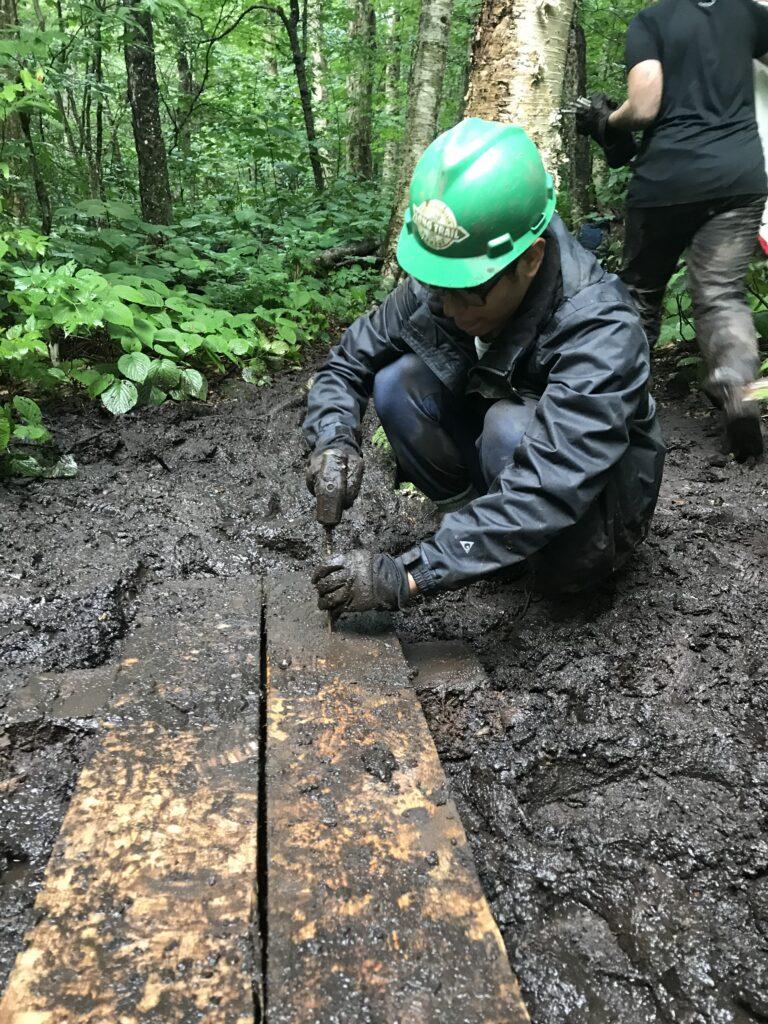
Trail work along the Long Trail. Photo courtesy of Green Mountain Club
What’s interesting about the Long Trail – and many of the similar “legacy” hiking trails of northern New England – is that it sees a lot of people. The Green Mountain Club estimates that the trail experiences over 400,000 visits per year, mostly on day hikes to prominent peaks like Camel’s Hump. In addition to the allure of wild sub-alpine forests, waterfalls, and high-peak vistas, the Long Trail has another key advantage – its history and reputation. Most visitors to the trail know what they are signing up for; some might even be drawn to the challenge. They expect to see a difficult trail. It’s a draw despite its design and condition.
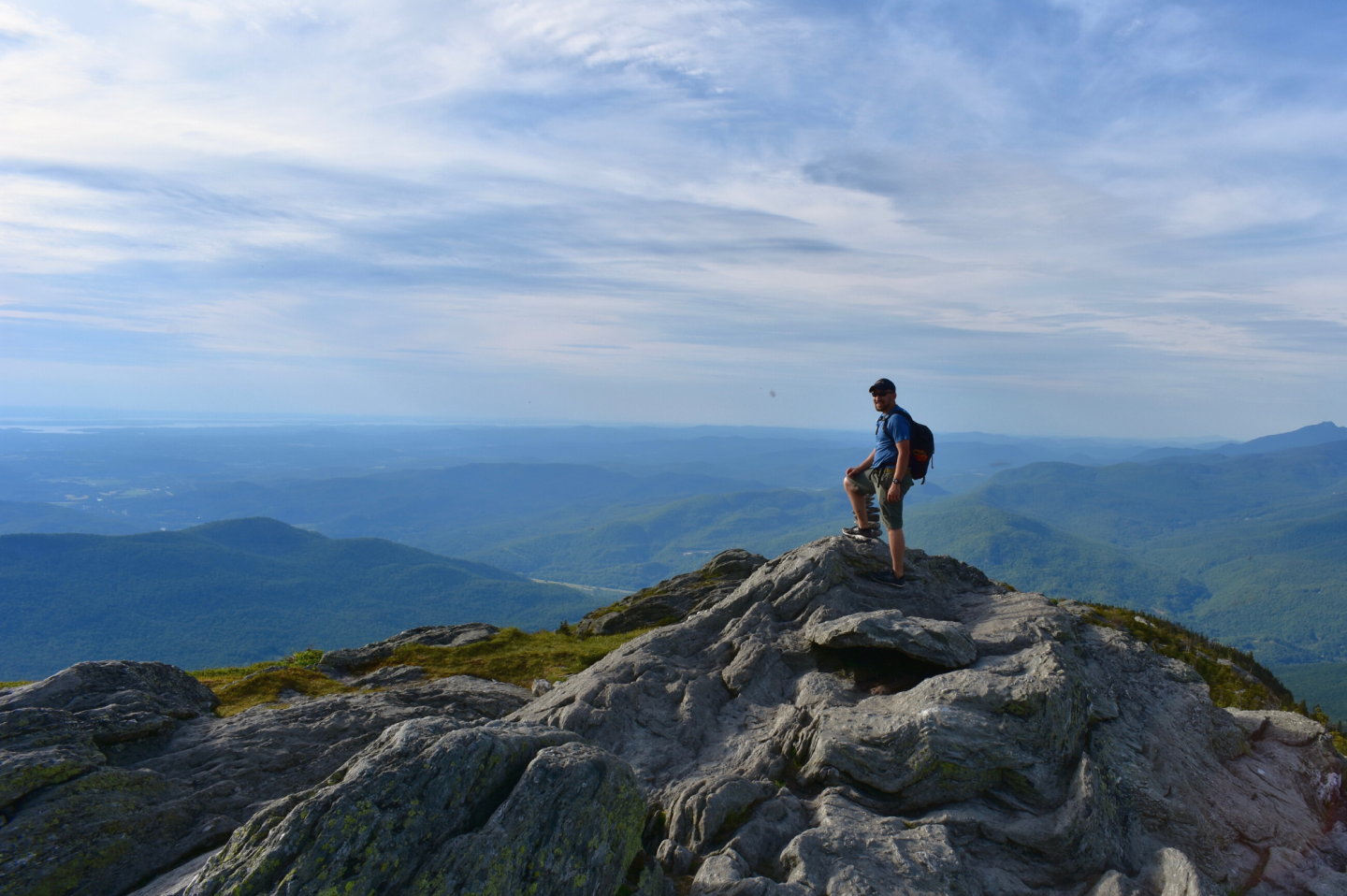
Summit of Camel’s Hump along the Long Trail. Photo courtesy of Green Mountain Club.
The Velomont, on the other hand, is in its infancy. Conceived as a parallel, mountain bike-equivalent to the Long Trail, once finished it will be the among the longest hut-to-hut mountain bike trail systems in the United States. Some initial sections of the trail are complete, with many others in development. Completion of the trail is not expected for at least a decade.
Unlike the Long Trail (which actively avoids developed areas), the Velomont has more explicit economic goals. When preparing the Velomont Vision Plan, we made sure to highlight project leaders’ goal of bringing riders directly into Main Streets and small-town centers. Project leaders estimate that trail traffic could generate $3.5 - $6.2 million in total annual visitor spending in communities along the corridor – if projected visitation levels are achieved.
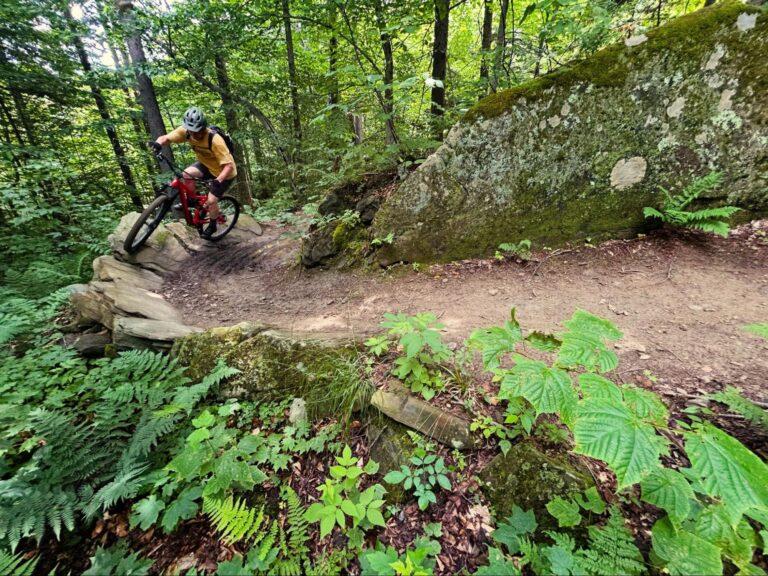
The Tunnel Ridge Trail, part of the Velomont. Photo courtesy Vermont Mountain Bike Association
As a brand-new trail, the Velomont cannot rely on history and reputation to get people out on the trail – it needs to earn it. Planners made it clear from the inception of the project that all new sections of trail would need to be professionally designed and constructed following modern trail standards to deliver the experience that trail users are expecting. So far it seems to be working, with new sections of trail - like Tunnel Ridge outside of Rochester in the Green Mountain National Forest - making waves amongst the mountain biking community.
YouTube video of Tunnel Ridge in Rochester, VT. Courtesy of Skills with Phil
Mission Alignment at the Local Level
Let’s take this mission-alignment concept down to the local level along the Velomont corridor. Located in central Vermont, Randolph is a future “Velomont town”, with the proposed corridor passing through the heart of downtown. This alignment is no accident; local partners have been working for years to put Randolph (a former hub of agricultural and wood products) on the map as a gateway to the outdoors.
Over time, Ridgeline Outdoor Collective (ROC) has established nearly 20 miles of purpose-built mountain biking trails on the edge of downtown, with trails ranging from mellow, beginner-friendly loops to expert-level jump lines and rock rolls. Early wins have included the establishment of a new downtown bike shop (which also serves as the headquarters for ROC), well-attended trail events, and partnerships with the local business community. As the Velomont is built out, planners envision a downtown “trail hostel” to cater to through-riders and other visitors.
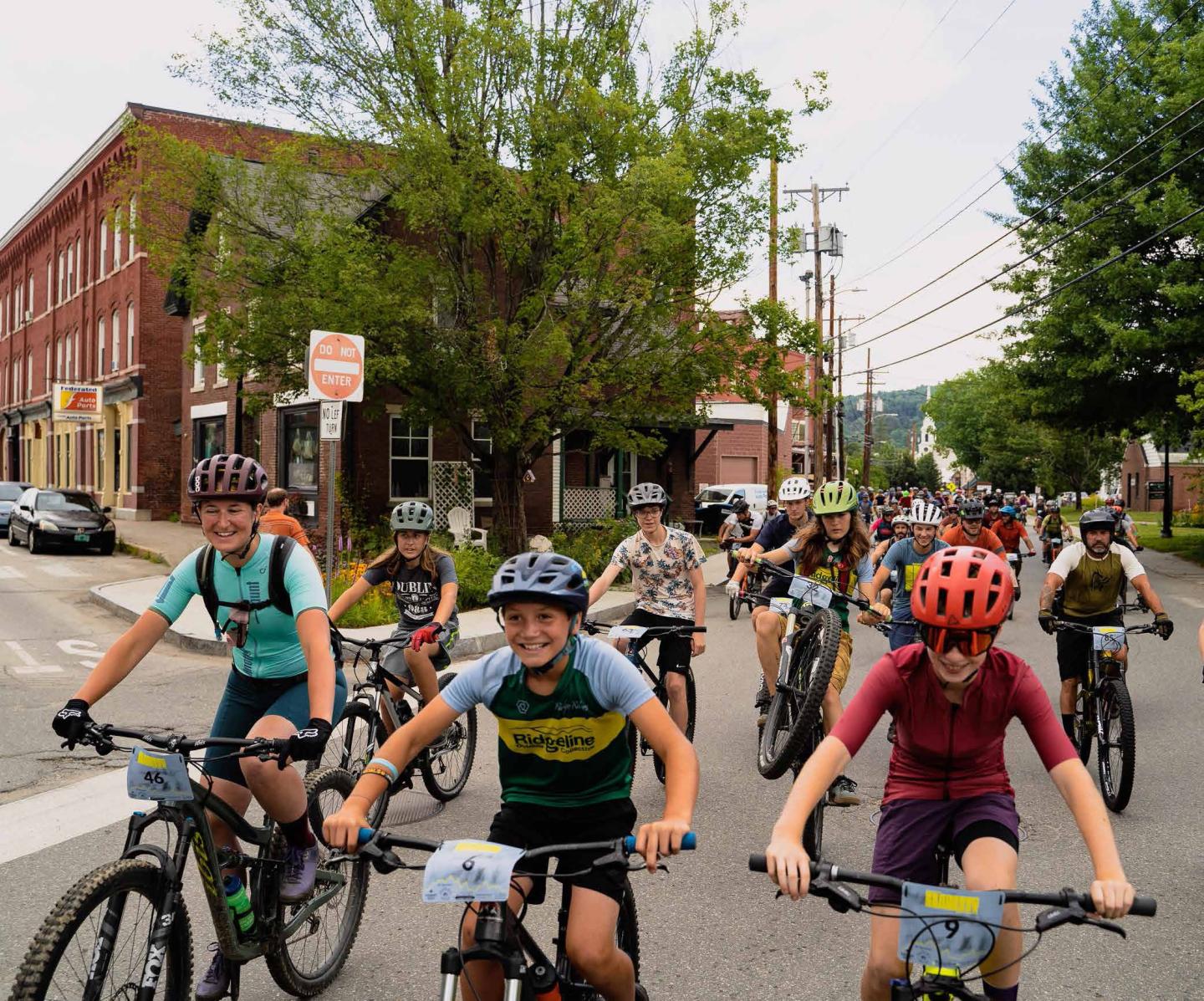
Riders depart on the Slab City Trail Challenge in Randolph, VT. Photo courtesy of Ridgeline Outdoor Collective.
Randolph’s mission is to be a destination that supports a thriving community, and the work to create and activate the trail system reflects that - implementing an expansive, well-designed trail system, securing funding for well-designed professionally built trails, connecting trails to downtown, and building up the local volunteer corps to keep the network in great shape. The community is doing the work to deliver what visitors to a destination mountain bike network will expect. That’s a strong economic asset, delivering on the promised outdoor recreation experience and mission-aligned to local context and goals.
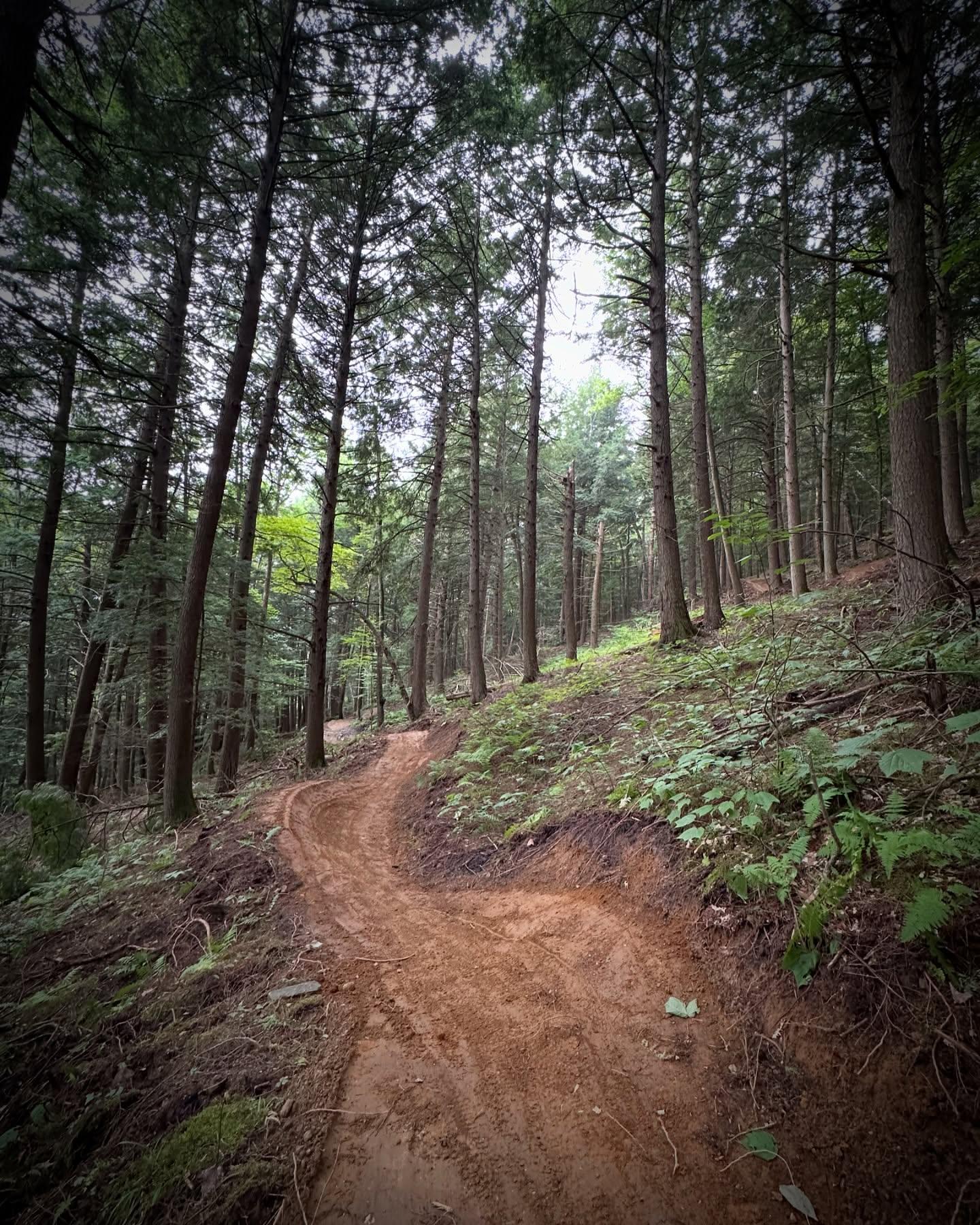
Construction of the Wildcat Ridge Trail in Bethel, VT. Photo courtesy of L&D Trailworks.
Just down the road in Bethel, a different story is playing out. In a village that previously had no public recreational trails, community leaders have succeeded in adding 4 miles of hiking and mountain biking trails behind the Bethel Elementary School. The trails range from beginner to intermediate in difficulty, and were built to modern, low-maintenance design standards. As a destination, the trails don’t stack up to Randolph’s 20-mile, dynamic trail system. But Bethel’s goal wasn’t to become a trail destination – it was to address a missing local quality of life amenity and help get kids outdoors. And in that context, the trails are a mission-aligned success.
Strong outdoor economies deliver on the promised outdoor recreation experience.
In this post, we presented a framework for thoughtful evaluation and planning for recreational infrastructure in outdoor economies:
- Design and condition
- Context and goals
- Expectations
Why are these factors so important to us?
Well, there is a basic deal at the center of the outdoor recreation economy. When someone shows up for their planned outdoor recreation outing, their experience should meet (or perhaps exceed) their expectations. The “family friendly hike” to a waterfall needs to be safe, comfortable, and accessible for toddlers, parents, and grandparents. The “paddler’s haven” needs safe, convenient, accessible locations to park cars and launch canoes and kayaks. In each of these cases, quality infrastructure is critical for providing the promised outdoor recreation experience. This matters not just for how outdoor recreation destinations are managed and maintained, but also for how they are created, improved, marketed, and activated.
Borrowing some basic economic terms, we can think of the promised outdoor recreation experience as the essential “supply” of a local outdoor economy. Visitation and participation – people showing up – demonstrates the “demand” for that experience. Successful outdoor economies deliver high-quality supply for in-demand experiences. Other factors are certainly in play, but ultimately this is about providing something that people want – a great time outdoors.
Economic success starts here.


